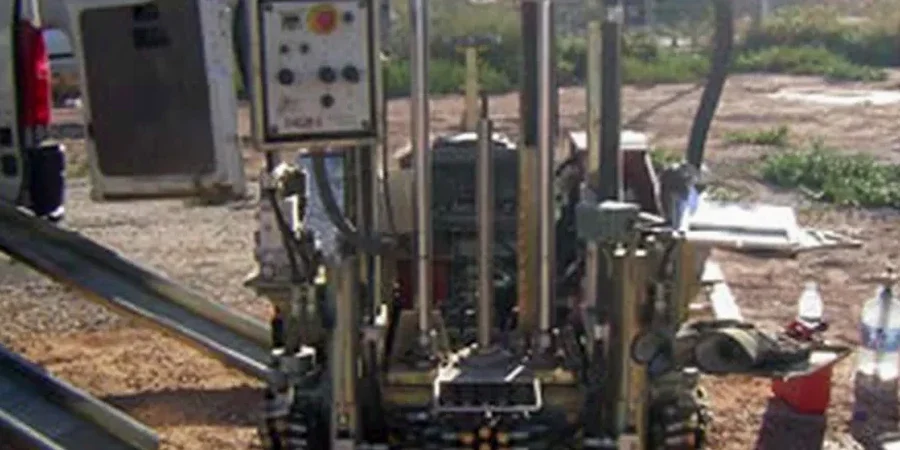
A contractor was breaking ground on a new commercial structure off McKeown Avenue, right where the ancient glacial Lake Nipissing shoreline transitions into dense basal till. The grain size changed every half meter: a lens of silt here, a pocket of sand there. Standard drilling was slow and the samples came up disturbed. We mobilized a 20-tonne CPT rig and pushed through the entire sequence in under three hours. That continuous tip resistance and pore pressure data revealed exactly where the soft clay stringers sat beneath a stiff desiccated crust. In North Bay, the glacial stratigraphy can shift dramatically within a single city block, and the Cone Penetration Test gives us a nearly continuous in-situ log that no split-spoon can match. We often pair it with seismic shear wave testing to constrain the small-strain stiffness profile when dynamic settlement matters for sensitive equipment footings.
In North Bay’s glaciolacustrine deposits, a CPTu log catches thin drainage layers that a standard SPT spoon will miss entirely.