GEOTECHNICALENGINEERING
NORTH BAY ONTARIO
HomeInvestigationSPT (Standard Penetration Test)

SPT Testing in North Bay: Reliable N-Values for Northeastern Ontario Sites

Technical studies that support your project.

LEARN MORE

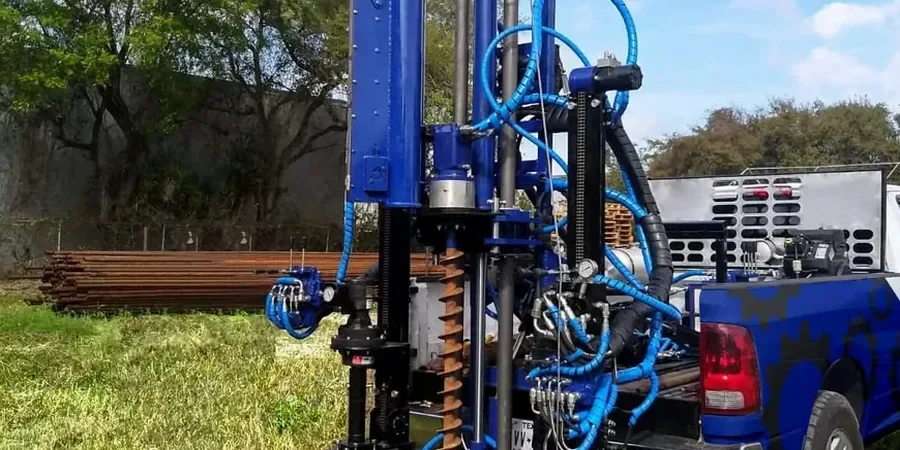
A site off Lakeshore Drive with its sandy overburden bears little resemblance to a property perched on the crystalline rock outcrops near Airport Hill. In North Bay, a few hundred meters can shift your foundation design from shallow footings on bedrock to deep piles through compressible silts. The Standard Penetration Test (SPT) bridges this uncertainty. Our drilling program records N-values every 1.5 m through the overburden, directly feeding into bearing capacity calculations under NBCC 2015 and CSA A23.3. For sites where the glacial stratigraphy is complex, we often pair the SPT with a CPT program to capture continuous tip resistance and sleeve friction through the softer layers before the refusal horizon.

In the Nipissing Basin's layered deposits, a single corrected N60 profile replaces three days of guesswork on footing depth.
Our service areas

Process and scope

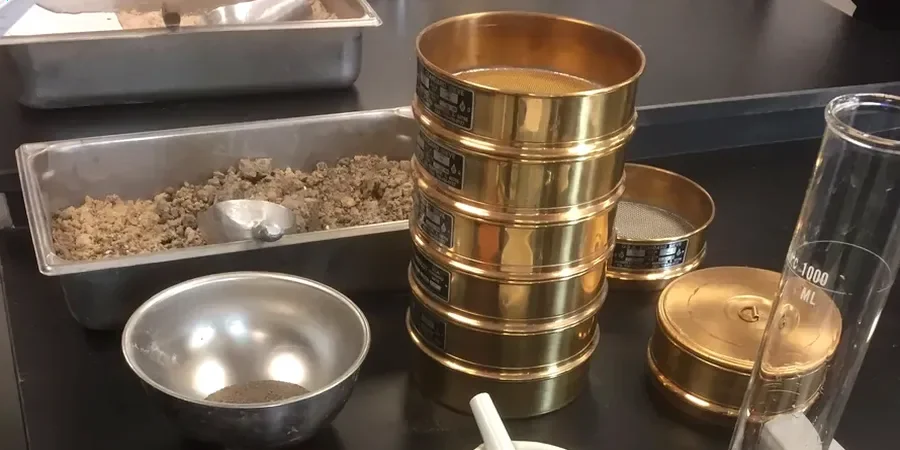
North Bay's post-war expansion pushed development from the compact downtown grid into the glaciofluvial plains of West Ferris and the clay-rich lowlands near Chippewa Creek. Each era of growth encountered a different depositional environment, and the SPT remains the benchmark for characterizing that variability. The test uses a 63.5 kg hammer dropped 76 cm to drive a split-spoon sampler 45 cm into the soil, with the N60 value recorded for the final 30 cm of penetration. Our field crews correct raw N-values for overburden pressure and energy ratio using the procedures outlined in ASTM D1586 and the Canadian Foundation Engineering Manual. Samples recovered from the split spoon are sealed immediately for laboratory index testing, linking penetration resistance with measured grain size distribution and plasticity.
SPT Testing in North Bay: Reliable N-Values for Northeastern Ontario Sites
Technical reference — North Bay Ontario

Site-specific factors

The glacial Lake Algonquin sediments underlying much of North Bay city limits present a classic SPT interpretation risk: loose-to-compact sands interbedded with soft, laminated silts. Misreading a single N-value in these transitional zones can place a footing in a layer that liquefies under seismic shaking or settles differentially under load. The NBCC seismic hazard for the region assigns a PGA of approximately 0.06 g for the 2% in 50-year hazard, yet even moderate ground motion can trigger excess pore pressure in saturated, low-N silt lenses below the water table at 2 to 4 m depth. We address this by logging drilling fluid returns, recording groundwater strikes during advancement, and applying Seed & Idriss cyclic stress ratio checks where corrected N60 values fall below 15 in saturated sands. The result is a foundation recommendation that accounts for the actual layering, not just a conservative assumption.

Need a geotechnical assessment?

Reply within 24h.

Email: info@geotechnicalengineering.xyz

Applicable standards

NBCC 2015 (Division B, Part 4), CSA A23.3:2014 (Design of Concrete Structures), ASTM D1586/D1586M-18 (SPT Standard Method), Canadian Foundation Engineering Manual (4th Edition)

Reference parameters

ParameterTypical value
Hammer Type63.5 kg automatic trip
Drop Height760 mm
SamplerStandard split spoon (50 mm O.D.)
Driving Interval450 mm (N-value over last 300 mm)
Energy CorrectionN60 per ASTM D4633
Typical Depth Range1.5 m to refusal (bedrock)
ReportingN60 vs depth log, soil description, groundwater

Quick answers

What does an SPT program cost for a residential lot in North Bay?

For a typical single-family lot requiring one borehole to refusal (usually 6 to 12 m in the Nipissing area), SPT testing ranges from CA$850 to CA$1,050. The final figure depends on access conditions — skid-steer drilling on a tight cottage lot near Trout Lake costs more than a track rig on an open West Ferris property — and on the number of samples recovered for lab testing.

How deep do you need to drill the SPT borehole?

We drill to practical refusal on the Precambrian bedrock, which defines the true bearing stratum. In downtown North Bay, refusal can occur at 3 to 5 m; in the deeper glaciofluvial channels south of Highway 17, overburden can extend past 20 m. The NBCC requires borings extend through any compressible layer and at least 1.5 m into competent bearing material.

Can SPT data be used for liquefaction assessment?

Yes. Corrected N60 values are the primary input for simplified liquefaction triggering procedures. We compare the cyclic stress ratio for the North Bay site-specific PGA against the cyclic resistance ratio derived from N60, fines content, and depth, following the Seed & Idriss framework referenced in the Canadian Foundation Engineering Manual.

Location and service area

We serve projects in North Bay Ontario and surrounding areas.

View larger map