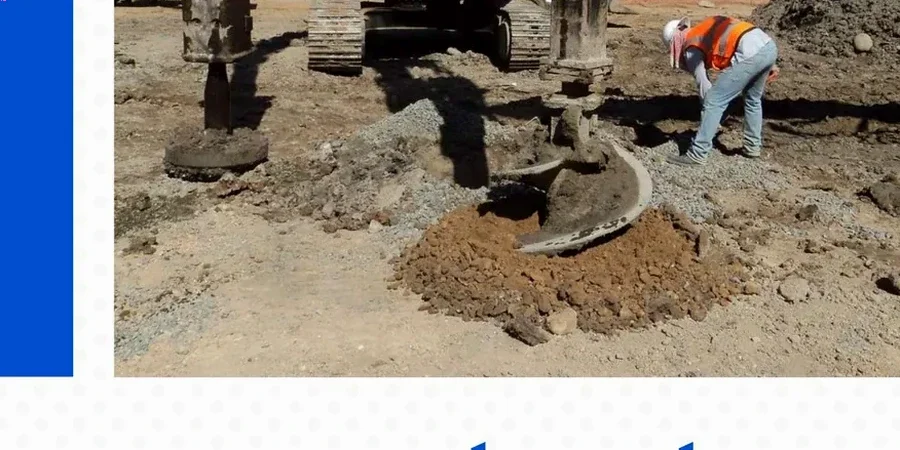
Driving from the granite outcrops of the Canadian Shield near Airport Hill down toward the low-lying waterfront on Lake Nipissing, you can feel the ground change. It is a geological shift that defines North Bay engineering. The Shield gives you solid bearing a few meters down, but the old lakebed deposits along the La Vase River corridor and Trout Lake Road are a different story. Here we encounter up to 15 meters of soft, compressible silty clay left by glacial Lake Algonquin. For any structure heavier than a single-family home, those soils demand a ground improvement strategy. Stone column design becomes the practical alternative to deep piling. It is not just about drilling and dumping rock; it is a controlled process where we size the columns, calculate the replacement ratio, and verify that the composite ground will carry the load with acceptable settlement. In our experience across the Nipissing District, a well-designed grid of stone columns transforms a problematic site into buildable land, often letting us use conventional spread footings where deep foundations would otherwise be the only option. This approach has proven effective on several commercial projects near the Highway 11 corridor, where schedule and budget are always tight.
In North Bay's varved clays, a stone column grid works as both a load-bearing element and a drainage path, tackling settlement and excess pore pressure in one solution.